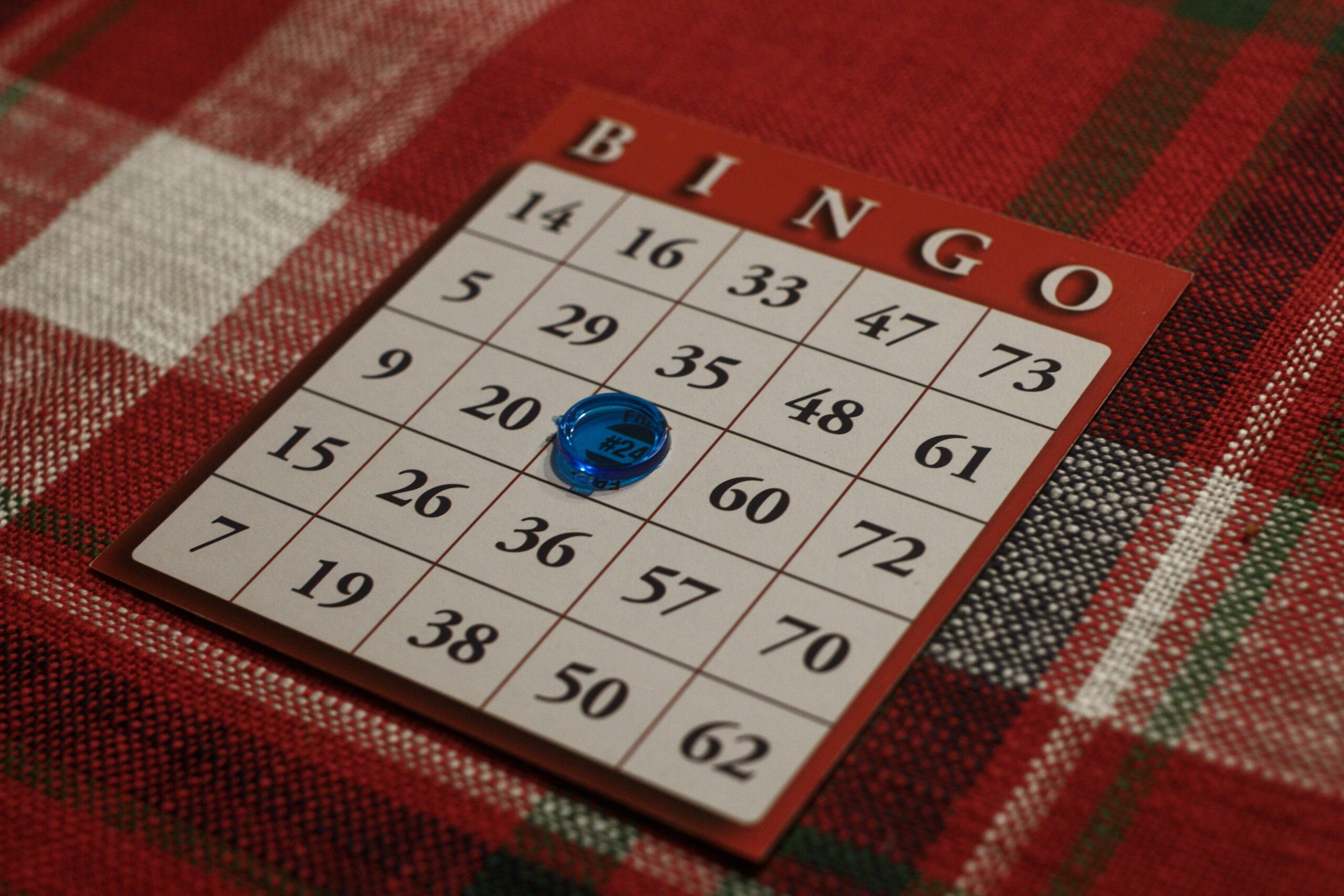
"Time for Bingo"
“Time for bingo!” The words rushed with a cheery lilt from the mouth of the harried, youngish woman who hurriedly stepped into the small room containing two single beds with bed rails, two plain chests of drawers, a couple chairs, some family pictures and personal items, and one elderly ,smiling woman sitting in a wheelchair, dozing.
“You ready to go to bingo, Mrs. Bourland?”
Her head lifted slowly as her eyes opened. My mother, replied, “What? Let me turn up my hearing aid.”
“Bingo time. Let’s go.”
“No, I don’t think I’ll go.”
“You’ll have fun, see some friends, maybe win a prize.”
“No, I need to stay here and rest my eyes.”
“You’ll be missing the fun!”
“OK.”
The visitor, the activity director at the Manor, backed out of the room, stepped across the hall to an almost identical room, and repeated her invitation to another woman who was sitting in a chair and looking out the window at the blooming magnolia tree in the courtyard.
Later, the harried activity director spoke with me as I passed her in the long, sterile hallway as I headed toward Mother’s room to continue our daily visit. “You know, your mom, just stays in her room in the afternoons, not doing any of the fun, social activities we make available for the residents. I really love your mom and would like her to join us in activities to brighten her day. I think she’s depressed.”
“Hmm, that’s interesting. I …”
Before I finished my comment, the activity director then recounted her interaction that afternoon, unsuccessfully trying to persuade Mother to play bingo, adding that Mother never had gone to bingo since she moved into the Manor.
I noted, “Perhaps you could say something such as, ‘Mrs. Bourland, how ‘bout I push your chair down to the activity room, and you can see what you think. If you want to leave, I’ll bring you right back to your room, and that will be fine.”
“OK, I might try that.”
“I don’t think that Mother’s ever played bingo in all her 90-plus years; I’ve never known her to be interested in it,” I continued. “Besides, she’s kind of shy around people she doesn’t know well. But, if she wasthere, even briefly with the option to leave, and could talk with one of her new friends, maybe she’d be willing to go to bingo or other group social activities.”
“Oh, I see.”1
So, what’s the point or points of recounting this paraphrase of an actual event? I think that it illustrates several important points about dealing with older adults as well as the possible value of incorporating behavior analysis principles and procedures in doing so.
For starters, the kind and well-meaning Activity Director was so focused on getting Manor residents to attend the planned social activities- all included on the monthly activity calendar (which was printed in 14-point font, resulting in a number of the residents not being able to read the schedule)- that she gave limited attention to the possibility of people controlling their own lives. People making decisions for themselves now is recognized in many nations as a right that everyone has, regardless of age. The United Nations has issued statements declaring the rights of older people to make decisions for themselves and be as nearly independentas possible (United Nations, 2002). Those rights can be limited legally through a legal process if a person can be shown to not be able to give informed consent regarding some decisions, but, even then, the person’s preferences should be respected so long as safely possible. The profession of behavior analysis now explicitly acknowledges the necessity of obtaining informed consent as much as possible by people served by behavior analysts, and, where that is not possible, obtaining assent (e.g., Mead Jasperse, Kelly, Ward et al., 2023; Morris, Detrick, & Peterson, 2021).2 Not allowing older persons to make as many decisions as appropriate regarding their lives and activities treats them in the way that children are treated, devalues them as persons, and disrespects them. It is likely that this is done unconsciously and not intentionally. The well-meaning Activity Director appeared to assume that all older people living at the Manor would be, possibly should be, interested in playing bingo.
Treating everyone in a group of people as though they are all the same, ignoring their individuality is a form of stereotyping and discrimination, even if not intentionally. Treating senior people as if they are all the same and have the same interests and, often, with limited abilities due to advanced age, even if unintentional, is a form of ageism. (Broadly speaking, ageism is,“Prejudice or discrimination on the grounds of a person’s age; age discrimination, esp. [sic] against elderly people,” Oxford Dictionary of the English Language, 2021). Behavior analysts are acutely aware of the importance of treating each person as an individual, not assuming that people in a particular category, such as an older person, all have the same interests, the same repertoire, and the same reinforcers.
The Activity Director at the Manor should have made sure that she had preference assessment information for each resident (e.g., What do they like to do? What are and have been their hobbies and leisure activities? What types of music, movies, and TV programs do they like? What do they like to eat and drink? With whom do they like to socialize?). A variety of leisure and social activities could be made available, reflecting the preferences of the residents. Additionally, people should be gently encouraged and not pressured to participate in scheduled activities, particularly activities that are relatively new or unfamiliar to them. A couple of long-time practices in applied behavior analysis (ABA) that the Activity Director could be wise to use is reinforcer sampling and priming. The procedures explore people’s interests and possibly facilitate their engaging in new activities by providing a resident extended opportunity to sample engaging in an activity, possibly with some encouragement to try each activity, using prompting and positive social reinforcement,possibly with a peer who enjoys an activity demonstrating it and inviting the person to join them. Of course, a person with very unusual activity preferences might not be interested in activities geared toward the majority of residents might not be interested in the scheduled activities, but personally preferred leisure activity opportunities still should be made available for them.
Another simple tactic that the Activity Director could use if she isn’t already using it, is giving residents advance notice of an upcoming activity. That notice could be made using a public address system. McClannahanand Risley (1974) and Reitz and Hawkins (1982) found that announcing availability of social and leisure activities increased older residents’ participating in the activities. Residents who have hearing deficits or who are likely to be sleeping when activity announcements are made could be visited personally and told something such as, “Good evening, Mrs. Bourland, I just wanted you to know that in a few minutes, several of us will be getting together in the dining room to sing some old, favorite songs. I’ll come back in a few minutes to check if you’d like to join us. If you do, I’d be happy to help you with your wheelchair.” If the person is sleeping, they could be touched gently and told of the upcoming activity. If they don’t appear awake and responsive to talking, they should be allowed to continue resting and not interrupted further. Providing advance notice about activities shows respect for people and allows them the opportunity to prepare for a change in activity. Few of us like for someone to spring something on us and expect us to immediately engage in activities.
Another issue worth considering regarding the Activity Director attempting to persuade an older woman who reacted in a shy manner to many people, especially people with whom she had little previousexperience, is, “What does ‘shy’ mean?” Several possible definitions could be offered. In general, though, a shy person often (1) feels uncomfortable when near people they don’t know or scarcely know, (2) initiatesinteraction with such people with very long latencies, if at all, (3) responds to comments and other behavior directed toward them with brief responses, if at all, as well as (4) perhaps limits eye contact with and physically approaching people they do not or scarcely know.
What might be a respectful and effective way for the Activity Director to address participating in social activities with a person behaving shyly? First, the Activity Director would be well advised to realize that older people who behave in a shy manner have had years, actually decades, of that behavior working for them in some way. Perhaps “shy” behavior helps them avoid situations where they don’t know how to act (e.g., what to say to someone they don’t know, how much to tell a stranger about themselves). Such behavior possibly even results in their receiving some increased attention from others who try to reassure and encourage them. Recognizing those possibilities would help the Activity Director and others avoid blaming the elder person for their shy behavior. Also, that realization could minimize their expecting that shy behavior, with its long history, will change quickly.
The Activity Director could benefit from recognizing when a person behaves shyly, perhaps by observing them around other people, asking them about how comfortable they are with people they don’t know, and asking people who know them well (e.g., family members, friends) about how the person interacts with people they don’t know. Next, the Activity Director could acknowledge that the person is shy and probably is uncomfortable when with people they don’t know. The resident then should be assured that the Director will not try to force them to do anything they don’t want to do. The resident should be encouraged to let the Activity Director know when they are uncomfortable or don’t want to do something.
The Activity Director should assure the person that they will ask them if they’re uncomfortable or want to do something else- and then respect their wishes. Next, the Director could ask the resident if there is another resident with whom they would like to visit or engage in an activity, even if just briefly. If someone is mentioned, the resident should be asked when they might like to be with them. (The Director might need to tell about the interests of some of the other residents and let the resident suggest someone with whom they would like to spend some time and what they would like to do.) The Activity Director could approach the situation as described earlier when trying to set up the time and place for the residents to get together. The resident should be allowed to end the time with another resident and genuine, respectful praise given of their willingness to meet with another resident. Gradually, with the agreement of the shy resident, the number of people with whom they visit and how long the visits last can be increased gradually and carefully. After visits with several other people, the resident might be more willing to visit or participate in group activities, even just briefly.
As a behavior analyst recognizing that everyone’s behavior is influenced by their experiences, what might be some possible influences on the Activity Director’s behavior of trying very hard to get residents to attend activities such as bingo games? The Activity Director urging Manor residents to attend planned social activities at the facility very probably reflects reinforcement contingencies impacting the Director’s behavior. Very possibly, her performance evaluation might reflect residents’ attendance at the planned activities with greater attendance resulting in a better evaluation. Also, Manor residents doing as she requests or encourages probably reinforces her making those requests in the same or similar manner, even if everyone does not. (That would be an example of intermittent reinforcement that usually promotes persistence in a behavior even when that behavior does not always have the intended outcome.)
Additionally, the facility might be able to charge Medicaid, government funding sources, or insurance companies more reflecting more residents attending planned social activities, contributing at least indirectly to paying employee salaries. In both situations, positive reinforcement contingencies could influence the Activity Director to push residents to attend planned social activities. Of course, negative reinforcement could play a role, also, if they are pressing residents to attend activities to avoid receiving a negative performance evaluation from her supervisor.
Another suggestion for the Activity Director is that they explore changing how resident participation in activities is assessed. The changed procedures could use measures of resident activity engagement other than just counting how many of them attend scheduled activities. One approach would be to adapt some of the procedures developed decades ago by Todd Risley and colleagues at the University of Kansas for assessing behavior of people in a variety of settings, including older adults in nursing homes, along with quality of the settings. In the nursing home, initially over a number of days, they first systematically conducted a series of brief observations of where the residents were located, what they were doing, and occurrence of any verbal interactions. Next, they established an activity area and activity time in the residence and supplied the area with a variety of activities of interest to the residents (after doing some type of reinforcer assessment). During the activity times, the number of residents in the activity area and what they were doing were briefly observed and documented. The two sets of information provided information regarding the number of residents involved in various activities as well as the percentage of time during the activity period that residents actually engaged in activities. Similar procedures for directly observing what residents and staff at a nursing home were used by Shore, Lerman, Smith, Iwata, and DeLeon (1995). Such measures of resident activity could provide more sensitive and flexible data regarding residents’ activities during a planned activity period as well as at other times and locations. If the Activity Director at the Manor could provide such data to their supervisors, then they could feel more comfortable taking a more person-centered and flexible approach to social activities and be less likely to try to persuade all the residents to play bingo when they had little interest in playing bingo or in being with people they did not know or were uncomfortable being around.
Behavior analysts have addressing ways that behavioral principles can contribute to improving the quality of life of older persons, including those living in group residences. Some of the notable early work includes Burgio and Burgio (1986), Hussian (1981), Hussian and Davis (1985), Lindsley (1964), Lundervold and Lewin (1992). McClannahan (1973), McClannahan, and Risley (1974, 1975- clearly this is not an exhaustive list. Behavior analytic work focusing on living environments and on work with individuals has continued since the early work. Nevertheless, the early work suggests practical ways to addresses the needs, interests, concerns, and quality of life of seniors that remain relevant decades later.
Behavior analysts have much to offer that can contribute to seniors living in nursing homes, actually ALL seniors, being happier, more valued, more respected, and, in general, experiencing a better quality of life than they now experience. Everyone doesn’t have to play bingo- they can have individualized options that are not limited to what an activity director selects in a “one size fits all” approach to activity planning.
References
Behavior Analyst Certification Board. (2020). Ethics code for behavior analysts. https://bacb.com/wp- content/ethics-code-for-behavior-analysts/
Burgio, L. D., & Burgio, K. L. (1986). Behavioral gerontology: Application of behavioral methods to the problems of older adults. Journal of Applied Behavior Analysis, 19, 321-328. https://doi.org/10.1901/jaba.1986.19-321
Hussian, R. A. (1981). Geriatric psychology: A behavioral perspective. New York: Van Nostrand Reinhold.
Hussian, R. A., & Davis, R. L. (1985) Responsive care: Behavioral interventions with elderly persons. Champaign, IL: Research Press
Lindsley, O. R. (1964). Geriatric behavioral prosthetics. In, R. Kastenbaum (Ed.), New thoughts on old age. New York: Springer Publishing Company.
Lundervold, D. A., & Lewin, L. M. (1992). Behavior analysis and therapy in nursing homes. Springfield, IL: Charles C. Thomas Publisher.
McClannahan, L. E. (1973). Therapeutic and prosthetic living environments for nursing home residents. The Gerontologist, 13, 424-429. https://doi.org/10.1093/geront/13.4.424
McClannahan, L. E., & Risley, T. R. (1974). Design of living environments for nursing home residents: Recruiting attendance at activities. The Gerontologist, 1974, 14, 236-240. https://doi.org/10.1093/geront/14.3.236
McClannahan, L. E., & Risley, T. R. (1975). Design of living environments for nursing-home residents: Increasing participation in recreation activities. Journal of Applied Behavior Analysis, 8, 261-268. https://doi.org/10.1901/jaba.1975.8-261
Mead Jasperse, S.C., Kelly, M.P., Ward, S.N. et al. (2023). Consent and Assent Practices in Behavior Analytic Research. Behavior Analysis in Practice. https://doi.org/10.1007/s40617-023-00838-5
Morris, C., Detrick, J. J., & Peterson, S. M. (2021). Participant assent in behavior analytic research: Considerations for participants with autism and developmental disabilities. Journal of Applied Behavior Analysis, 54,1300-1316. https://doi.org/10.1002/jaba.859
Oxford Dictionary of the English Language. (2021). Ageism. Oxford University Press.
Reitz, A. L., & Hawkins, R. P. (1982). Increasing the attendance of nursing home residents at group recreation activities. Behavior Therapy, 13, 283-290. https://doi.org/10.1016/S0005-7894(82)80038-5
Shores, B.A., Lerman, D.C., Smith, R.G., Iwata, B.A., & DeLeon, I. G., (1995). Direct assessment of quality of care in a geriatric nursing home. Journal of Applied Behavior Analysis, 28, 435-448. https://doi.org/10.1901/jaba.1995.28-435
United Nations, Political Declarations and Madrid International Plan of Action. On Ageing, Second World Assembly on Ageing, Madrid Spain, New York: 2002 www.un.org/esa/socdev/documents/ageing/MIPAA/political-declaration-en.pdf
Comments are closed